अल्लूरी सीताराम राजू
HISTORY
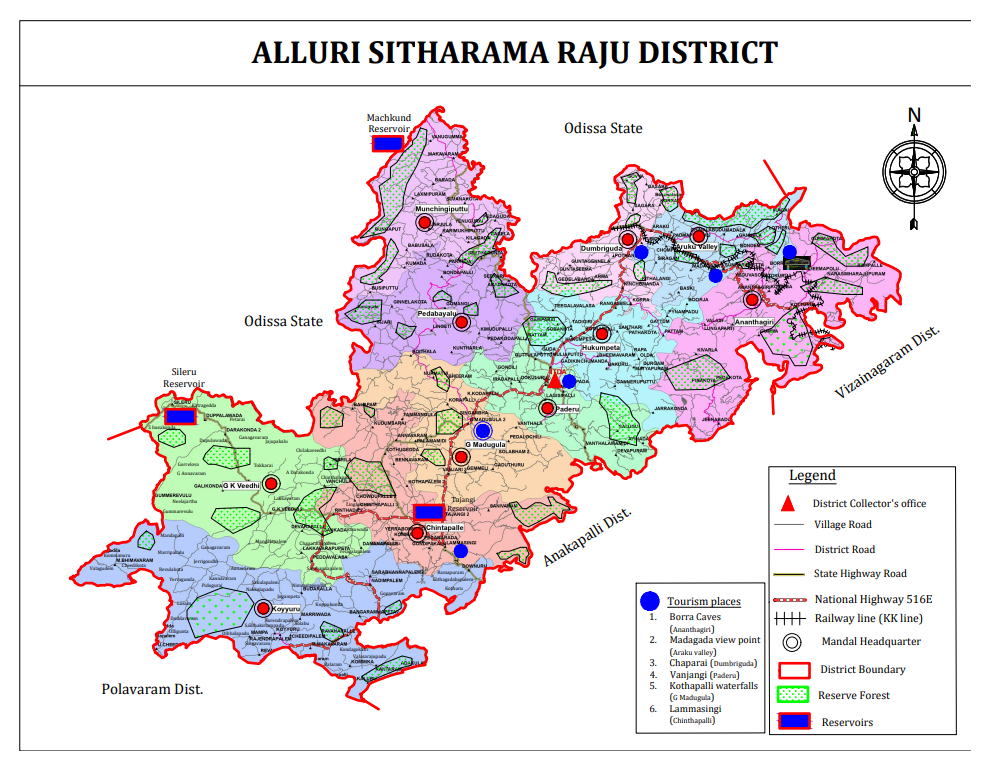
The Alluri Sitharama Raju District Formed from Paderu and Rampachodavaram divisions. On April 4, 2022, Andhra Pradesh reorganized its districts, doubling the total from 13 to 26. The 13 new districts were carved from existing ones to improve administration. Prior to year 2022 Paderu Revenue Division in Visakhapatnam Erstwhile district and Rampachodavaram Revenue Division in Kakinada Erstwhile District. The district is named after the legendary revolutionary Alluri Sitarama Raju, who is famously known as the Manyam Veerudu (Hero of the Jungle). He led the Rampa Rebellion (1922–1924) against British colonial rule, operating from this very region. The administrative headquarters of the district is located at Paderu.
With effect from December 31, 2025, Andhra Pradesh reorganized its districts once again, increasing the total number of Districts from 26 to 28. The new district of Polavaram, which has its headquarters in Rampachodavaram, was created by combining 12 mandals from the former Alluri Sithramaraju District, while the new Alluri Sitharamaraju District was formed with 11 mandals and its headquarters in Paderu.
The Alluri Sitharama Raju District is one of the north-eastern districts of Andhra Pradesh, and it lies between 17°17′ and 18°21′ of northern latitude and between 80°53′ and 82°50′ of eastern longitude. It is bounded on the north partly by the Odisha State, on the south by Anakapalli District, on the west covered by Polavaram District and on the east by Vizianagaram District. The entire District also comes under the Jurisdiction of ITDA.
PHYSICAL FEATURES: The district presents a distinct geographic division. It consists of the hilly regions covered by the Eastern Ghats with an altitude of about 900 meters dotted by several peaks exceeding 1200 meters. Forest block topping with 1615 meters embraces the Mandals of Ananthagiri, ArakuValley, Dumbriguda, Hukumpeta, Munchingput, Pedabayalu, Paderu, G.Madugula, Chinthapalli, G.K.Veedhi and Koyyuru Mandals.
PLACES OF TOURIST IMPORTANCE:
Araku Valley is about 115 Km from Visakhapatnam lying on the top of the eastern ghats. The area of the valley is roughly 36 Sq. Kms and the altitude is between 600 and 900 meters above mean sea level. The entire area is inhabited by aboriginal tribes and attracts visitors from all over the country. The journey to Araku Valley on the ghat road with thick forests on either side is it self interesting and thrilling. The Ananthagiri hills on the way to Araku Valley are famous for coffee plantation. Araku Valley has an exploratory-cum demonstration farm which is about 20 hectares in extent a government orchard and a government silk farm with mulberry gardens. Cocoons from the silk farm are reeled in the farm, and the silk yarn and waste are sent to Hindupur.
The beautiful Araku Valley with its bracing climate, orchards and the Ananthagiri ghats, which present an enchanting view to the visitors, is attracting tourists not only from all parts of India also from abroad as there are good communication and halting facilities. The natural beauty of this valley is enhanced by the tribal people who abound here with their own folklore and traditions. Dhimsa Dance is a unique feature of the tribes of Araku, which is being organized in the nights of every Saturday and Sunday for entertaining tourists. There is a railway station at Araku on D.B.K. line passing through dozens of tunnels from Ananthagiri Mandal villages onwards to Araku is a thrilling experience. An habitat museum which reveals the entire tribal culture and an Horticulture nursery cum training centre at Padmapuram and a water fall at Ranajilleda is worth seeing.
The Borra Caves are one of the most magnificent geological wonders of the Araku Valley region, located in the Ananthagiri hills of the Eastern Ghats. These limestone caves are among the deepest in India and are estimated to be over 150 million years old.
Geological & Cultural Significance
Stalactites & Stalagmites: The caves are filled with fascinating limestone formations. Over centuries, water percolating through the roof has created various shapes that locals and guides often identify as figures like Shiva-Parvati, a human brain, and a crocodile.
Religious Importance: A small Shivling is naturally formed deep inside the cave, making it a sacred site for many devotees who visit particularly during Shivaratri.
Lighting: The Andhra Pradesh Tourism Development Corporation (APTDC) has installed multi-colored LED lighting inside, which beautifully illuminates the rock formations and adds a dramatic effect to the vast caverns.
Madagada View Point is one of the most scenic vantage points in Araku Valley, particularly famous for its “cloud bed” views and sunrise. It is in Madagada village, roughly 10 km from the main Araku town.
The “Cloud Sea”: During the winter months and early mornings, the valley below is often completely blanketed in thick white mist, making it look like you are standing above a sea of clouds.
First Viewpoint: Easily accessible via a very short trek (about 100 meters) from the parking area.
Second Viewpoint: Located higher up, requiring a longer walk (about 1 km) or a drive via a narrower road. This spot typically offers the best “above the clouds” perspective.
Cultural Experience: You can often find local tribal women performing the traditional Dhimsa dance near the parking area. There are also opportunities to try archery or rent traditional attire for photos.
Padmapuram Gardens in Araku Valley offers a unique aerial perspective through hot air ballooning, typically available in two ways:
1. Tethered Rides (Daily availability)
Outside of major festival dates, tethered hot air balloon rides are often available near the gardens or in the general Araku Valley area, depending on the season and weather conditions.
The balloon is secured to the ground with ropes and rises to a height of about 300 feet.
The Sunkarametta Wooden Bridge (also known as the Canopy Walk or Coffee Trail) is a relatively new eco-tourism attraction located in the Sunkarametta area of Araku Valley, within the Alluri Sitaramaraju (ASR) district.
It was recently developed by the Andhra Pradesh Forest Department to offer visitors a unique way to experience the region’s famous coffee plantations from an elevated perspective.
The Canopy Walk: The bridge is a rustic wooden structure built amidst dense coffee plantations and tall silver oak trees. It allows you to walk through the greenery at an elevated level, making it feel like a canopy walk.
Scenic Views: It is highly popular for its sunrise and sunset views. The mist-covered hills and the symmetry of the coffee plants make it a favourite spot for photography and nature lovers. Shooting Location: Due to its picturesque design, it has quickly become a premier location for pre-wedding shoots and movie sequences.
Chaparai Waterfalls (also known as the Dumbriguda Waterfalls) is one of the most popular scenic spots in the Araku Valley region. Unlike vertical drops, Chaparai is characterized by its slanting rocky slopes and continuous water flow, making it a unique natural attraction.
Surroundings: It is nestled within thick forest cover and rolling hills, providing a serene environment for nature photography.
Culinary Specialty: The area is famous for “Bongulo Lo Coora” (Bamboo Chicken). Many local vendors prepare this traditional tribal dish fresh on-site, where chicken is marinated and cooked inside bamboo stalks over an open fire.
The Araku Pinery (formerly known as the Anjoda Silk Farm) is a serene eco-tourism spot located in Sunkarametta, right alongside the main road to Araku. It offers a rare experience of walking through a dense, tall tropical pine forest—a landscape quite unique to this part of India.
Pine Plantation: Spread across 27 acres, the Pinery features towering pine trees originally planted in the mid-1970s. The vertical symmetry of the trees makes it a favorite for photography and peaceful nature walks.
Atmosphere: It is much quieter than the main Araku town or Padmapuram Gardens. The soft bed of dried pine needles and the cool, filtered sunlight through the canopy create a very calming, “out-of-India” aesthetic.
Camping & Tents: The Forest Department has recently developed well-maintained camping tents here for those who want to stay overnight in nature. It is considered a very safe spot for night stays.
Cafeteria: There is a small cafeteria on-site that serves snacks and coffee, though some visitors prefer bringing their own food for a picnic.
The Tribal Museum Araku is a centrepiece of the Araku Valley experience, dedicated to preserving and showcasing the heritage of the indigenous tribes of the Eastern Ghats.
Cultural Artifacts: Many projects have started tenting & stargazing, promoting livelihood in the area. The museum features an extensive collection of traditional tools, hunting equipment, kitchen utensils, and intricately designed ornaments used by the local tribes.
Realistic Dioramas: Life-sized mud huts and clay sculptures depict the daily life, social structures, and rituals of different tribal communities, providing a vivid educational experience.
One of the main highlights is the section dedicated to the Dhimsa dance, a traditional folk dance. You can often see displays of the musical instruments used and even watch live performances during peak tourist seasons.
Handicrafts Section: There is an area where you can purchase authentic tribal handicrafts, including wrought iron art, bamboo items, and traditional textiles.
The Coffee Museum in Araku Valley is a unique destination that blends history with a gourmet experience, making it a must-visit for anyone interested in the region’s famous coffee culture.
Historical Gallery: The museum traces the history of coffee from its discovery in Ethiopia to its introduction in the Araku Valley. It features detailed dioramas and informative displays about the cultivation and processing of coffee beans.
The Coffee Lab: You can see various machines used in coffee production and learn about the different roasting and brewing techniques that give Araku coffee its distinct organic flavor.
Retail & Souvenirs: There is an extensive shop where you can buy various grades of organic Araku coffee powder, coffee-flavoured chocolates, and handicrafts made by local artisans.
Cultural Tourism: Cultural tourism in the Alluri Sitharama Raju district offers an immersive journey through the heritage of the Eastern Ghats, centering on the traditions of the Bagata, Koya, and Valmiki tribes. Visitors can engage with authentic tribal lifestyles through dedicated museums, community-led coffee plantations, and historical sites linked to India’s freedom struggle.
Dimsha Dance<span style="padding: 0px; margin: 0px; list-style-type: none; border: 0px; font-family: inherit; font-size: medium; font-